

The chemical formula of Sodium Laureth sulfate is CH3(CH2)10CH2(OCH2CH2) nOSO3Na, and its chemical structure is as seen in the picture:

The physico-chemical properties of Sodium Laureth Sulfate are used in the sectors of personal care products and detergents, while the emulsifying properties are mostly applied in the cosmetics industry. The chemical formula of Sodium Laureth Sulfate is C18H37NaO7S. Sometimes the number represented by n is specified in the name, for example n=3. The product is heterogeneous in the number of ethoxyl groups, where n is the mean value. The CAS number of the compound is 68891-38-3. Its chemical name is lauryl alcohol ethoxylated sulfate sodium salt. However, it is usually called by its INCI name (Sodium Laureth Sulfate) or its abbreviation (SLES).
Sodium Laureth Sulfate is an anionic surfactant from the group of alkyl ether Sulfates. The consistency of a pure product available in trade is a fluid paste with transparent to bright yellow colour. It is mostly sold in a concentrated form, as an aqueous solution, where the content of the main ingredient exceeds 70%. Sodium Laureth Sulfate is freely soluble in water. It shows an increased resistance to hard water compared to Sodium Lauryl Sulfate. It is used for the manufacturing of cleaning agents or body care products and shows a good compatibility with other ingredients of washing formulations as well as synergism with amphoteric and non-ionic surfactants. Sodium Laureth Sulfate is produced by the ethoxylation of lauryl alcohol. Its biodegradability, whether in aerobic or anaerobic conditions, makes it a good candidate for care products.
More features of sodium Laureth sulfate are listed in the table below:

Sodium Laureth sulfate is commercially available in different concentrations as follows:
- SLES %70 or SLES N70 (also known as TEXAPON N70)
- SLES N30 (also known as TEXAPON N30)
SLES improves cleaning power, controls foam, and is cost-effective. SLES also enhances the performance of stain-removing enzymes and helps to maintain the stability of liquid detergents. Furthermore, SLES is more biodegradable and less harsh on the environment than other detergent ingredients.

Sodium Sulfate Market size was valued at US$ 1.05 Bn. in 2021 and the total revenue is expected to grow at a CAGR of 4.6% from 2022 to 2029, reaching nearly US$ 1.50 Bn.
The Asia Pacific region is expected to dominate the Sodium Sulfate Market during the forecast period 2022-2029. The Asia Pacific region is expected to hold the largest market share of xx% by 2029. China, being the world’s largest market for sodium sulphate, has the highest reserves of mirabilite, also known as Glauber’s salt, and is growing its production capacity to satisfy global demand. China is a major supplier of sodium sulphate due to its low production costs. As a result of these factors, the Asia Pacific sodium sulfate market is expected to grow rapidly during the forecast period. Furthermore, the growing population in the region is driving up demand for products like soaps, detergents, paper, and glass, which is helping to drive up demand for sodium sulphate. Other Asia Pacific countries, such as India and Vietnam, are also expected to contribute significantly to the sodium sulphate market’s growth. North America region is expected to grow rapidly at a CAGR of xx% during the forecast period 2022-2029. This is due to the growing demand for the Sodium Sulfate in the United States, Canada, and Mexico in the region.

Becaufe of its properties, Sodium Laureth Sulfate is widely applied in many household chemicals:
- Washing detergents: cleaning agents for hard surfaces such as floors or tiles – Sodium Laureth Sulfate is an effective surface active agent contained in household detergents used for removing oily stains and residues, such as food stains on carpets. Due to its capability to decompose oil and fat, SLES is also an ingredient in may industrial cleaning agents, such as motor degreasers or solid industrial detergents.
- Industrial degreasing and washing formulations: due to its capability to decompose oil and fat, SLES is also an ingredient in many industrial cleaning agents, such as motor degreasers or solid industrial detergents. It is also equally efficient in acidic and basic environments.
- Dishwashing agents: in dishwashing agents, Sodium Laureth Sulfate shows excellent cleansing capabilities. It shows high resistance to hard water. It is highly emulsifiable and foam-forming, as it generates high and very stable foams. Besides, it improves the viscosity of washing formulations in the presence of electrolytes and amphoteric and non-ionic surfactants.
- Automotive chemical products: with its special foaming properties, it is an ingredient of the so-called active foams. Active foams are preparations which make it possible to remove even very coarse contaminations without the risk of scratches on the car body. The active foam allows for washing a car without touching it. Such a preparation covers the car body with a cleansing layer that bonds with dirt particles and dissolves them. Given its foaming properties and strength as a detergent, Sodium Laureth Sulfate it commonly applied for that purpose.
- Shampoo
- Shower gel
- Hand wash
- Face wash
This ingredient is also used as a lubricant, cleanser, foaming agent, degreasing agent, and dyeing agent in petroleum, printing, and leather industries.

- New plastic drums
- IBCs (intermediate bulk containers)
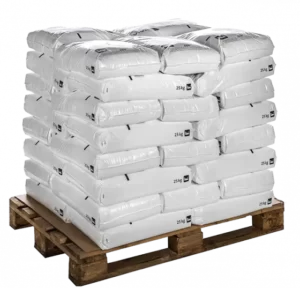


)
Reviews
There are no reviews yet.