
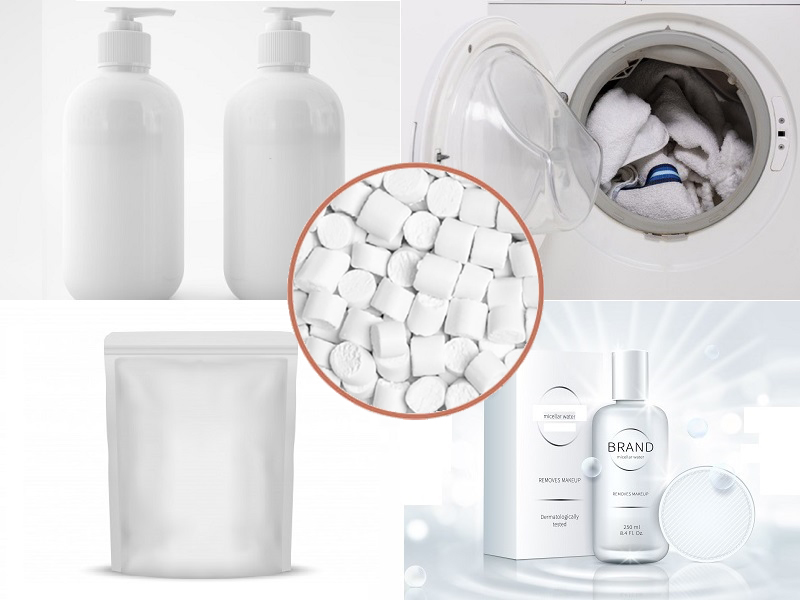
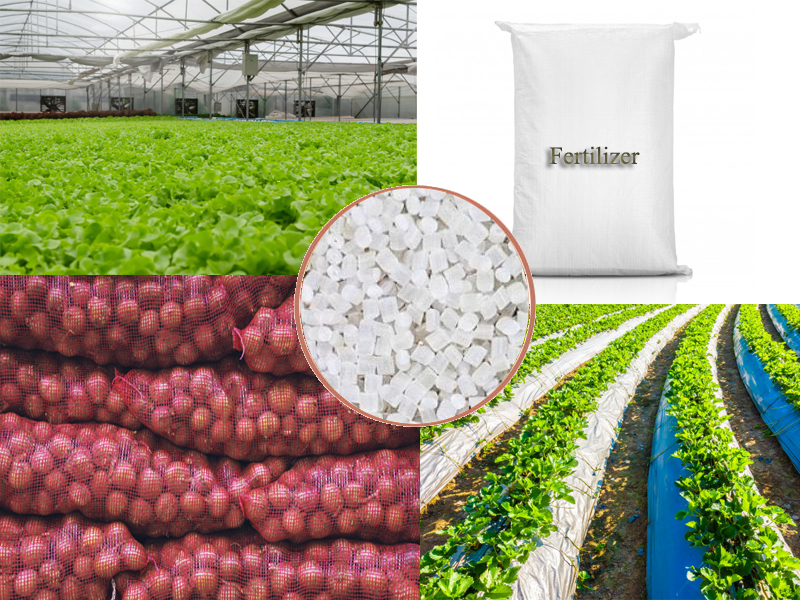


 White masterbatch generally used to add white color to polymeric products. Treated rutile TiO2 is used. This pigment has a higher refractive index than any other white pigments, giving better light-scattering power. It has a good chemical and thermal stability. Moreover, titanium dioxide imparts a degree of UV protection to the polymer by absorbing the UV light of spectrum and blocking some UV radiation. We provide white masterbatches base on different career resins and containing 20-80% white pigment content in them. We supply all kinds of white masterbatches, especially high filled grade, based on special formulation using the high-tech machines.
Characteristics:
- Coating of primary particles with polymer
- Power mixing of pigment and other additives with polymer base
- High-quality dispersion of pigment with polymer
- Prevention of
agglomeration- High light reflecting and scattering effect
- Free flowing
Advantages:
- Optimum opacity
- High whiteness and brightness
- Excellent and uniform coating without dots
- More than 50% reduction of consumption masterbatch
- Improve heat stability
Application:
- Films requiring very high opacity
- Very thin gauge films
- LLDPE & metallocene LLDPE rich films for oil & milk flexible pouches
- Multi-layer and mono layer films
- TQPP, BOPP & BOPET films
- Non critical application films with higher thickness
- For High output machines
- Injection Molding, Blow Molding & Roto molding applications
- Thermoforming applications
- HIPS sheets for disposable cups & other similar applications
- Woven sacks & FIBC bags
- PET Fibers – yarn & staple fiber
- PP Non-Woven fabric
 Black masterbatch is a mixture of carbon black with a suitable polymer base. Depending on the final application, the polymer base can vary: polyethylene, polypropylene, polystyrene, EVA, and ABS with different grades. Black masterbatches have two general applications, separately or simultaneously:
- As a paint for polymer bases
- As a protection layer against ultraviolet (UV) radiations
Given a specific use-case, Petroplast Co.,Ltd. can create and optimize the Black masterbatch, adjusting the black carbon and polymer base to the client’s required specifications.
Characteristics:
- High-quality dispersion in polymer base
- Uniform particle size
- High brightness and shining
- Easy flow/ Low viscosity products
- No bloom
Advantages:
- Excellent dispersion and coating
- Durability against extreme weather conditions
- Improve heat stability
- Improve processability
- UV stability
Application:
- Pipe and fitting
- Home appliances
- Injection molding
- Blow molding plastic container industries
- Packaging
- Automotive
 Solid pigments with different colors that used for producing of color masterbatches act either by absorbing parts of the spectrum and reflecting other parts depend on chemical structure. Petroplast Co.,Ltd. Color masterbatches offered on the following five categories:
- Organic and inorganic pigment masterbatches
- Metallic masterbatches
- Pearlescent masterbatches
- Fluorescent masterbatches
- Custom-made masterbatches
In addition, various formulations according to customer demand can be produced.
Characteristics:
- Optimized formulation based on the standards offered in this area
- Using a variety of resins depend on formulations
- High concentration of pigments
- Avoid the formation of agglomerates
- Using high quality pigments
Advantages:
- Intense coloring and coating
- High color stability
- Uniform dispersion of masterbatch without dots in end product
- Reduction in consumption of masterbatch due to higher concentration of pigment
- High thermal stability
Applications:
- Blow molding of bottles
- Injection moulding
- Injection moulding of household items
- Lamination
- Tarpaulins
- Insulation of cables
- Electrical & Electronic items
 Filler masterbatch is a compound of calcium carbonate, primary Polyethylene resin and other dispersing plastic additives. This product is used as a filler – filler masterbatch to reduce costs, increase productivity and shape the end product. Calcium carbonate masterbatch combined with plastic (PE, PP, PS, ABS, …) are primitive or regenerated in blowing, extrusion, spinning, …The product is granular so it is easy to use and mix with different ingredients easily. Mixing ratio ranges from 5% to 50% depending on the specific product. This ratio is adjusted based on the production technology and the quality requirements of the end product.
Characteristics:
- Power mixing of calcium carbonate with polymer base
- Uniform dispersion of calcium carbonate on polymer matrix
- Prevention of agglomerates in masterbatch
- Using high quality of calcium carbonate
Advantages:
- Lack of dots in end product
- Improve surface printability
- Decreasing of fiber’s thread
- Easier processing
- Film capability
- Ability to produce paper stone
- Ability to produce decorative stone
Applications:
- Production of ceiling board, plastic door frames
- Production of PVC pipes and plastic fittings
- Manufacture of electric cables
- Film production
- Production of yarn
- Molded products
 A slip agent is a large molecule with high molecular weight that’s extremely slimy in melted form. Adding a slip agent decreases fraction significantly, increasing the life of machinery and improving production rate. Slip agent additives are used as lubricants in polymer base products. Over time, slip agents move to the surface of the product and form a thin and invisible layer, decreasing the friction between the surfaces. The percent of slip agents used in LDPE and LLDPE films depends on the friction coefficient of the base resin.
Slip agents migrate over time to the surface of polymeric films where they begin to crystallization. The formed layer of slip agents on polymer surfaces, reduce friction between the different film layers. Migration phenomena in polymers is a time-dependent process which is depended on the concentration of the additive and the chain length of additives and base polymer.
Advantages:
- Decrease the coefficient of friction
- Reduce the adhesion of the film together
- Increase the quality of the film surface
- Create very smooth film surface
- Facilitate the processing
- Increase life of machinery
Applications:
- PE films (one and multi-layer)
- BOPP films
- OPP films
 The appearance of a product is very important. Plastic products can begin to yellow, giving them a color that negatively affects their appearance and hurts customer appeal. The tendency of many Plastic materials to yellow is due to degradation by UV or visible light.
Optical brighteners (OBs) or fluorescent whitening agents are chemicals that manufacturers add to their products, such as papers, plastics, and textiles, to give them a brighter and cleaner surface, and reduce the rate of natural yellowing that occurs over time. OBs trick our eyes into seeing a brighter white.
These chemicals are excited by wavelengths of light in the near-ultraviolet (UV) range (360 to 365 nm) and then emit light in the blue range (400 to 440 nm).
Petroplast Co.,Ltd. is able to produce a variety of optical brightener masterbatches with different bases and according to customers’ needs.
Advantages:
- Improves initial color
- Mask nature yellowing of plastics and decrease it
- Enhance the brightness of a product and loss of color opacity
- Improves the surface whiteness of plastics
- It gives smooth and glossy surface to polymeric film
- Improves optical properties
- Bring bright look of product
- Create glossy surface
- Increase the visual quality of recycled polymers
Applications:
- Clear & white opaque multilayer & monolayer films
- Sheets
- Injection molding products
- Plastic products by recycled materials
 Exposure to sunlight and some artificial lights can have adverse effects on the useful life of plastic products. UV radiation can break down the chemical bonds in a polymer. This process is called photodegradation. It ultimately causes cracking, chalking, color changes and the loss of physical properties. To counteract the damaging effect of UV light, UV stabilizers are used to solve the degradation problems associated with exposure to sunlight.
Petroplast Co.,Ltd. Provides anti UV and UV stabilizer masterbatches based on different polymers, as per our customers’ needs.
Advantages:
- Long-term durability
- Increased thermal stability
- Color stability
- Preserves mechanical specifications of products
- Increases durability of end products
- Microbe resistant
- Preserves physical appearance of products
Applications:
- Packaging
- Pipes and fittings
- Agri-films
- Gunnies and jumbo-bags
- Carton-plast
- Plastic cartons
- Geomembranes
- Auto industry
- Plastic furniture
 Polymers are heat, shear and oxygen sensitive materials and exposure to the heat and shear of processing alone can cause chain scission followed by degradation and reduce the aesthetic and functional features. Also, upon exposure to oxygen, auto oxidation is initiated by the creation of the free radicals. This oxidative degradation process via breaking or cleavage of their polymeric chains or by cross-linking between chains can lead to number of undesirable effects, including surface cracks, discoloration, deterioration of mechanical properties.
Antioxidants are used to inhibit or retard polymers from oxidative degradation, both during processing (short term stabilization) and during use (long term stabilization). Antioxidants are organic compounds that inhibit this process by reaching with free radicals and decomposing these reactive species.
Advantages:
- Improve the processing of polymers
- Maintain a consistent melt viscosity at processing temperature
- Increase the service life of polymeric components
- Maintain shine and transparency
- Protect from yellowing and discoloration
- Prevent surface cracking
- Prevent odors
Applications:
- Pipes
- Profiles
- Films
- Tapes
- Cables
- Geotextiles
- Injection molded parts
- Blow molded items
- Roto moulded tank street
 Fog can be seen in films used in the food packaging and agricultural industries. Fog usually appears in packaging of food items that are stored in cold and humid places. Water drops formed on the inside of packaging decrease the transparency of the film, and decrease the quality and freshness of the food inside.
In the agricultural industry, the fog formed on films decreases the amount of sun rays reaching the plants, and the water drops sometimes burn the plants due to their lens effect.
Anti-fog additives and treatments, in the most basic sense, are chemicals that prevent the condensation of water in the form of small droplets on a surface resembling fog. This improves the appearance of the packaged food and makes it look fresh.
Advantages:
- Increase clarity of packaging
- Preserves freshness and quality of the food
- It passes the standards for usage in the food industry
- Improves light transmittance and thus increase plant growth
- Decreases damages of plants from sunburn
- Prevents drippage
Application:
- Food packaging industry
- Agriculture films industry
 Flame retardants are added to plastics to increase resistance to ignition, reduce flame spread, suppress smoke formation, and prevent a polymer from dripping. The primary goal is to delay the ignition and burning of materials, allowing people more time to escape the affected area. Petroplast Co.,Ltd. provides a broad range of flame retardant additives and compounds.
Advantages:
- Increased modulus
- Increased dimensional stability
- Increased heat resistance
- Increased creep resistance
- Increased chemical resistance
- Decreased shrinkage
- Cost reduction
Application:
- Electrical parts
- Construction & building
- Automotive parts
- Home appliances
- Telecommunications
 Adjacent layers in PE and PP films often stick together or are “blocked” due to Van der Waals forces in the polymers’ amorphous areas. This makes blow films use difficult.
The best way to overcome this issue is using anti-block masterbatches. This masterbatch creates a thin layer on the film, eliminating the Vander Waals attraction forces between the films and preventing layers from sticking together.
Advantages:
- Prevents polymer films from sticking
- Prevents slippage of film-on-film
- Preserves printing quality on film
- Excellent transparency
- High effect with low amount of usage
Application:
- Multi-layer PE films
- BOPP films
- FFS bags
25 Kg pp bags, palletized and shrink-wrapped


Reviews
There are no reviews yet.