


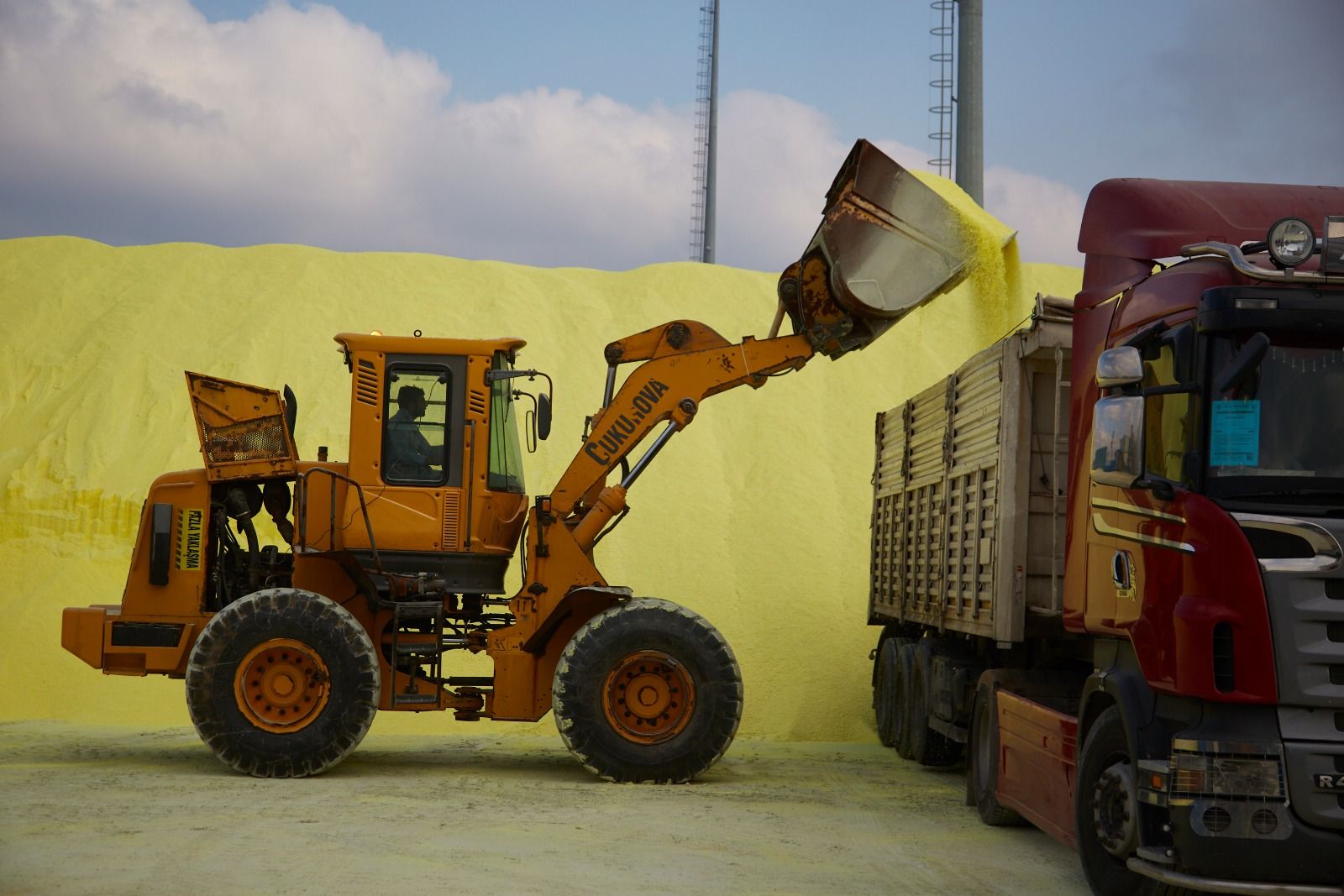
There are several forms of sulfur commodities: The main forms are granular, lump, and powder forms:
- Granules & Pastilles:
The granular sulphur is produced as a side product from the Gas Processing in particular from the Gas Sweetening Process that removes H2S then is converted to Liquid sulphur in the Sulphur Recovery Units (SRU) and finally that liquid sulphur is processed to produce Granulated Sulphur. Granular sulfur, as the name implies, is created through the gradual buildup of successive layers of sulfur around a central core. As a result, the ultimate product size can be controlled.
Drum granulation of solid sulphur is the most common method of producing dense, spherical sulfur granules. Sulfur granulation is a size enlargement process. Small sulphur seeds (undersized granules) are repeatedly coated with a liquid sulphur spray and cooled. With repeated application of liquid sulphur, the seed increases in volume and weight. The particles are coated until they reach a diameter of 2-6 mm. As the granule is enlarged, each coating of liquid sulphur is fully and structurally bonded to the layer beneath. This creates a spherical granule which is entirely dry and completely free of voids.
In sulphur pastillation, drops of liquid sulfur are placed on a steel belt cooler in regular rows using a liquid sulphur injection machine. The liquid sulphur loses heat as it moves on the steel belt cooler and forms into uniform hemispherical shapes called pastilles. Forming sulphur pastilles is an increasingly popular method of producing solid sulfur, due to the relative ease of setup and the high quality of the final product.
- Powder form:
Sulfur Powder is produced with various standard particle sizes ranging from -40 to -350 mesh and submicron. Processes for the production of micronized sulphur powder are dangerous and energy inefficient. Micronized sulphur powder is quite often produced by pulverizing sulphur lumps in mechanical milling equipment. Sulphur powder is widely used in agricultural insecticides and fungicide in the dust forms or in the form wettable sulfur in spray mixture along with other insecticides. Sulphur powder is also used in the manufacture of fertilizers, rubber vulcanization, medicines and explosives and in the manufacture of other chemicals. Sulphur powder has an ignition temperature of approximately 190 degrees Celsius and there is a potential for explosion when there is a dust cloud from handing sulfur. In addition, static from the particles can result in ignition. It should be stored in well-ventilated areas to reduce the risk of fire or explosion.
- Lumps:
Lump sulphur (technical gas lump sulphur) is one of the most common forms of sulfur commodity. It is created when using earthmoving equipment to recover sulfur which has been allowed to solidify in sheet or vats. Obviously, the product is extremely dusty. It is produced by filling and solidification of liquid sulfur, followed by milling the obtained blocks.
As a result of lump sulfur opening, storage and transport, it can make dust, ignite spontaneously, lose weight, contaminate and become moist, which are the main drawbacks of such a form of the sulphur commodity. Technical gas Lump sulfur is excessively required for a variety of applications in numerous industries such as the chemical, agricultural, medical, food, paper and rubber industry, while production of fertilizers, matches, gunpowder and dyes.

The research report covers key trends and prospects of sulfur products across different geographical regions including North America, Europe, Asia-Pacific, Latin America, and Middle East and Africa. Geographically, sulfur market is conquered by Asia Pacific owing to increasing energy production, along with the favorable government policies for the sulfur production in the countries of this region, especially in the China, India, Japan, and in emerging countries of the Asia Pacific region. North America is expected to register the fast growth rate, on account of increasing research and development investment by key market players and growing adoption of the sulfurs in the various end use applications such as phosphate fertilizers. Also, increasing investments in agricultural activities, coupled with rising production of vulcanized rubber are another factors anticipated to propel growth of the target industry in the countries of North America region.

Without sulphur, there would be no paint for Da Vinci’s Mona Lisa, no steel for the Eiffel Tower and our milk, meat, grains, eggs and most other foods would lack the proteins which plants, animals and humans need to thrive. Sulphur is present wherever you look, from the food we eat to the medicine we take. With its benefits to society, such as improving crop production and the quality of food, modern and environmentally-sensitive construction materials, and its use as a soil amendment.
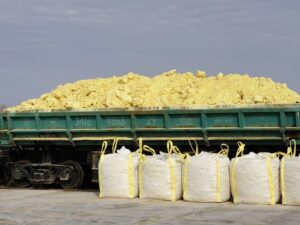
Sulfur is used in the vulcanization of black rubber, as a fungicide and in black gunpowder. Most sulfur is, however, used in the production of sulfuric acid, which is perhaps the most important chemical manufactured by western civilizations. The most important of sulfuric acid’s many uses is in the manufacture of phosphoric acid, to make phosphates for fertilizers.
Mercaptans are a family of organosulfur compounds. Some are added to natural gas supplies because of their distinctive smell, so that gas leaks can be detected easily. Others are used in silver polish, and in the production of pesticides and herbicides.
Sulfites are used to bleach paper and as preservatives for many foodstuffs. Many surfactants and detergents are sulfate derivatives. Calcium sulfate (gypsum) is mined on the scale of 100 million tons each year for use in cement and plaster.

- 1 MT Jumbo bag
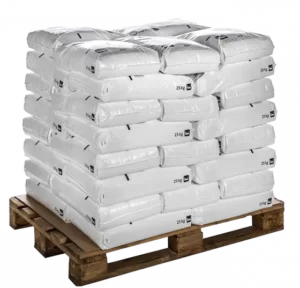
- 25 Kg small pp bag
- Bulk



Reviews
There are no reviews yet.