
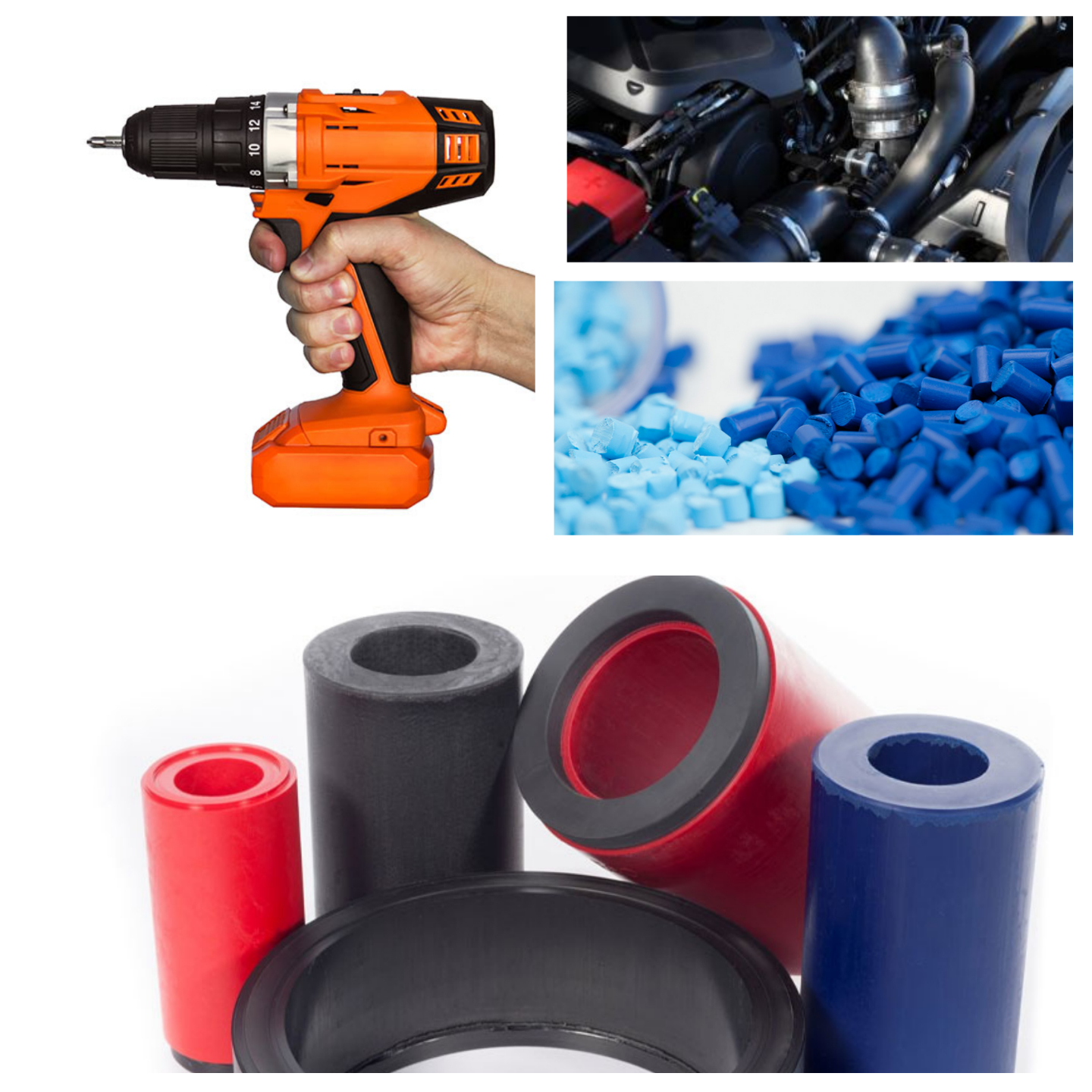




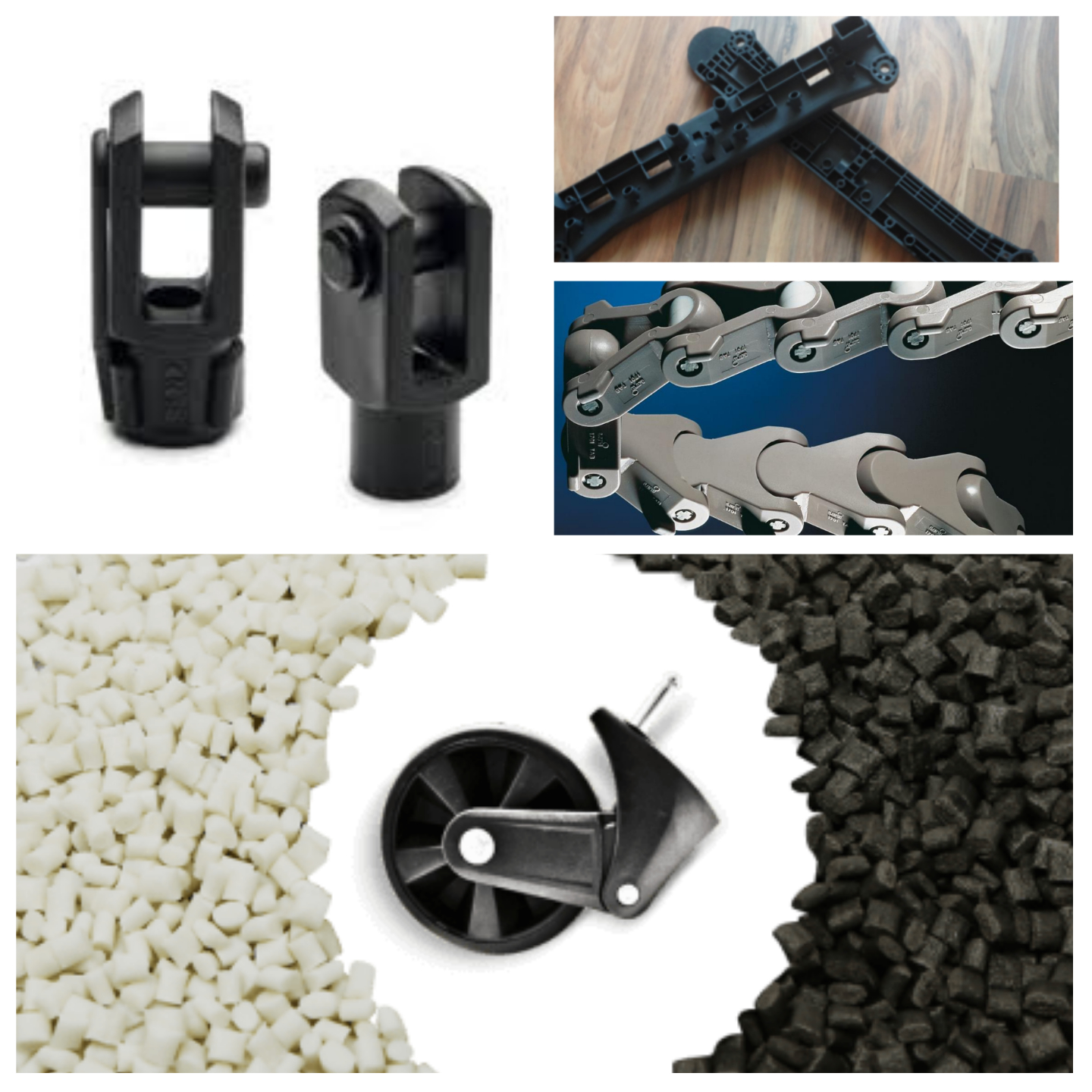


They are perfect combination of good mechanical and thermal properties. This group of materials used in various industries such as automotive industry, oil and gas transmission lines coating. The following groups are all from this family:
PE/GF compound:
- Modified with glass fibers up to 45% concentration
- Various colors
- High mechanical and impact properties
- Injection and extrusion grades
- good surface quality
- UV stabilized
PE/UV compound:
- Modified with fillers up to 45% concentration
- UV stabilized
- Injection and extrusion grades (film grades)
PE Powder compound:
- Rotational moulded items with good stiffness
- Good impact strength
- Good stress crack resistance
- Excellent external and internal surface finish
- Septic tanks
- Ordinary containers
PE/CC compound:
PE/CC compound is a combination of ‘PE and CaCO3’ and is mainly used for PE bags and films, blow mold and injection mold products based on LDPE, HDPE, LLDPE or a combination of them.PE is the major material in the compound (55-95%), the remaining (5-45%) contains CaCO3 and some additives. Therefor the quality of the compound is very close to PE raw material. In some case you can use this compound directly as an alternative to the PE resin to produce products.
Advantages:
- Modified with mineral fillers up to 45% concentration
- Various colors
- Flexible properties base on customers’ demand
- Injection and extrusion grades
- Great anti-block and anti-slip properties
Applications:
- Plastic bags
- Blow molding dishes
disposable tablecloths
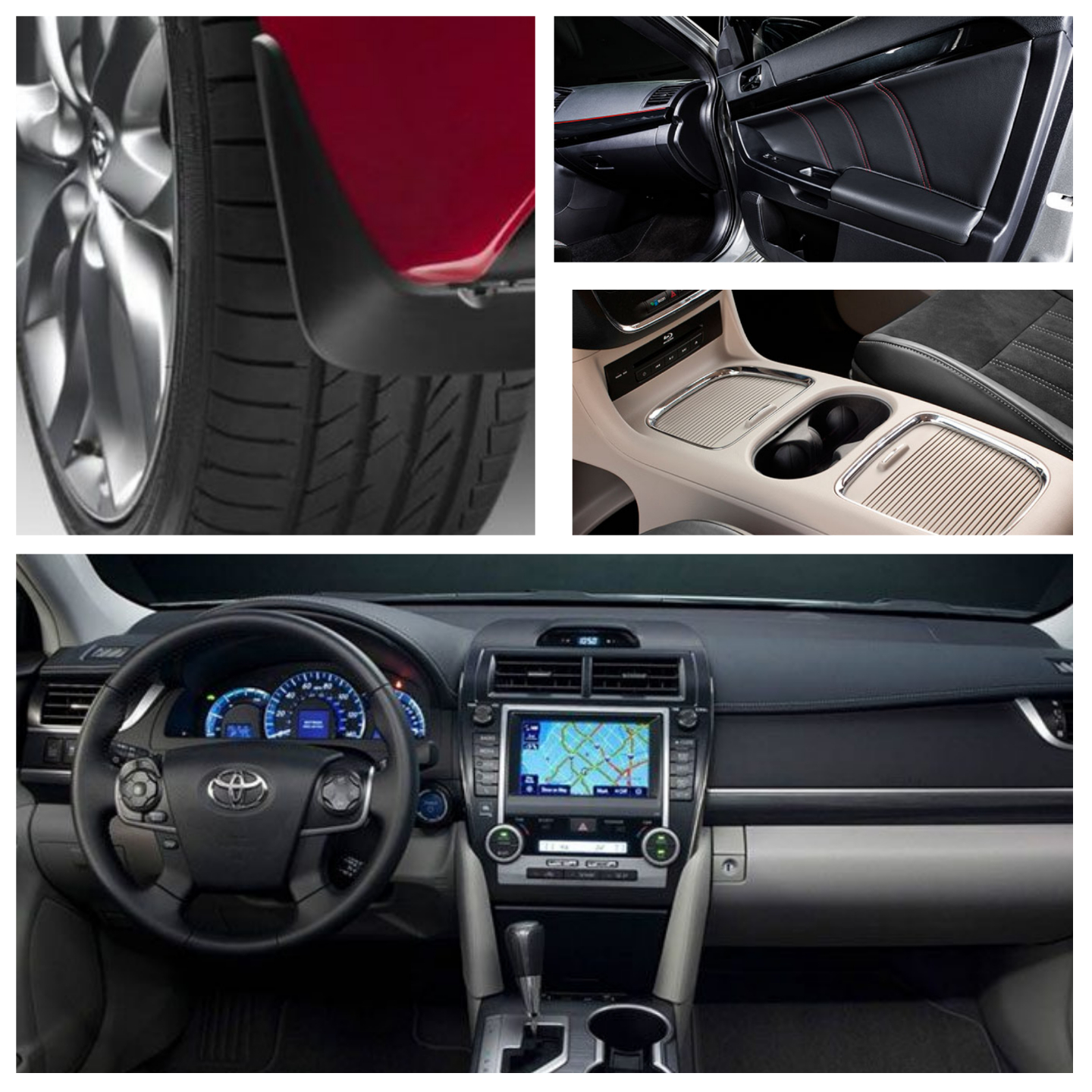
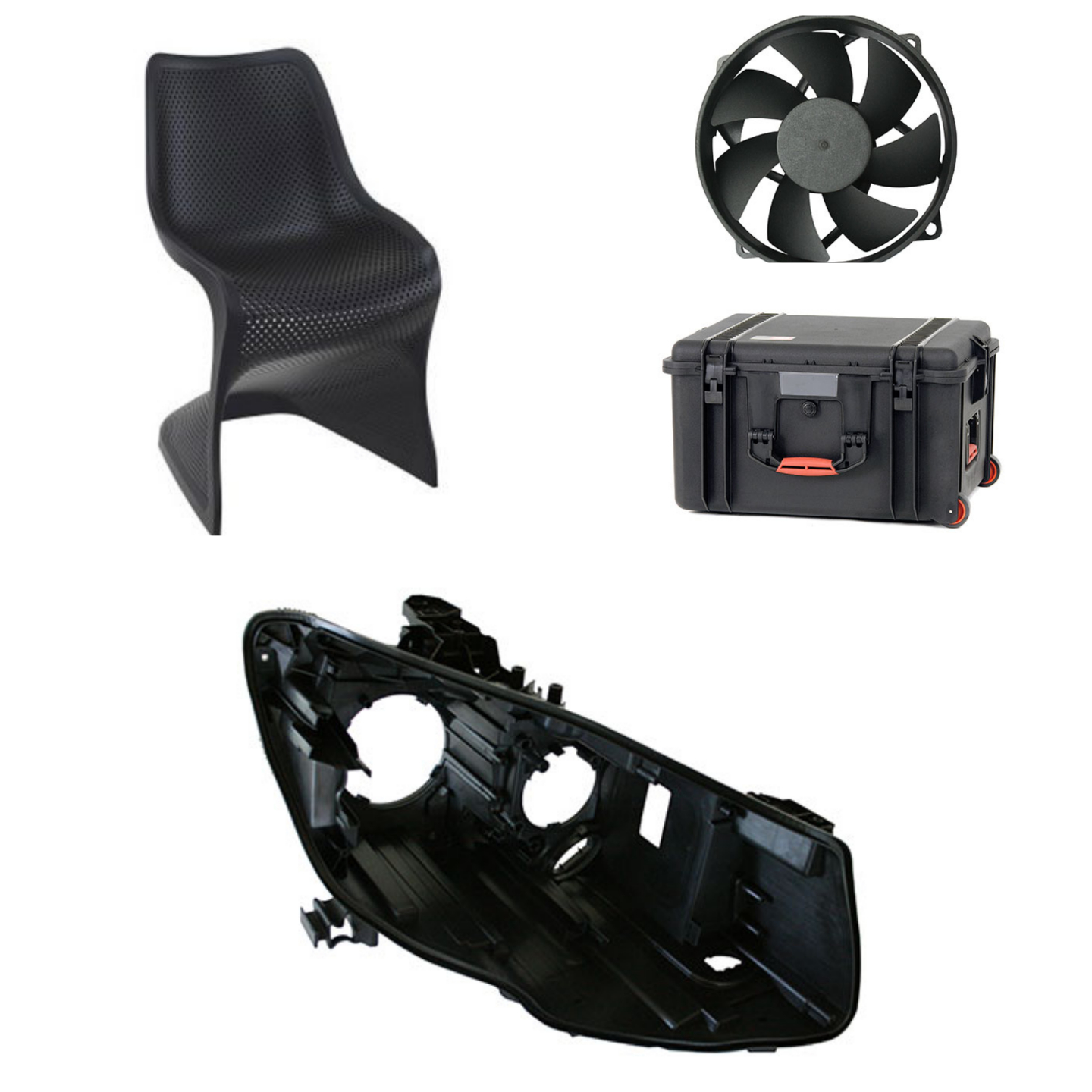
These PP base products are designed with engineering properties to meet special applications in injection molding or extrusion processes. Polypropylene compounds used in applications such as automobile industry, electrical goods, housewares and etc.
PP/COLOR Compound:
- Various colors
- Good process ability
- Flexible properties base on customers’ demand
PP/TALC Compound:
In its pure form, talc is the softest mineral substance with a Hardness of 1 on the Mohs scale, and with plate structure. It is hydrophobic on which different chemicals have no effect.
The main reason for adding talc to PP is to improve mechanical properties, especially impact resistance and tensile strength. Depend on the size and surface modification, other properties of PP+Talc such as heat conduction, creep resistance, and HDT can increase.
The cooling process of PP-Talc compounds decreasing the cooling time (and thus the cycle) of injection processes.
Advantages:
- Increased tensile strength
- Increased thermal resistance
- Improved creep strength
- Increased flexural modulus
- Decreased shrinkage
- Reduced warpage and thermal expansion
- Increased chemical resistance
- Increased scratch resistance
- Decreased cooling cycle & improved production efficiency
- Cost reduction
- Talc filled polypropylene
Applications:
- Automotive parts
- Electrical parts
- Constructions & building
- Home appliances
- PP/GF Compound:
Using glass fiber can create a good balance between specifications and cost of polymer compounds. Petroplast Co.,Ltd. provides a complete spectrum of mechanical and chemical resistant properties, to offer cost efficient solutions through weight saving, parts integration, processing efficiency and reduced energy and material consumption.
Using short fiber reinforced polypropylene compounds offers a good balance of properties to cost and is accessible with glass fiber content ranging from 10% to 40%. Final properties of PP+GF depend on the proper combination of specific length of short glass fiber, the PP matrix and the coupling agent which is just obtained by a superior technology to preserve the fiber length.
Advantages:
- High creep resistance
- Various colors
- High mechanical and impact properties
- Good surface quality
- Detergent resistant
Applications:
- Automotive parts
- Electrical appliances
- Home appliances
- Chairs and office furniture
- PP/CC Compound:
- Modified with mineral fillers up to 45% concentration
- Various color
- Flexible properties base on customers’ demand
- Injection and extrusion grades
- PP/UV compound:
- Modified with fillers up to 45% concentration
- UV stabilized
Injection and extrusion grades
They are polymer blended based on polyamides. These products are characterized by some features such as high strength, high stiffness, high impact strength, high heat deflection temperature, resistance to a wide range of chemicals, good electrical properties, excellent processability.
Due to polyamide’s excellent properties, these materials can be used in a wide range of applications such as automotive industry, electrical and electronic technology as well as consumer goods.
- PA/GF compound:
- Good surface quality
- Glass reinforced polyamide compound (injection grade)
- Good process ability
2. PA/UV compound:
- Injection and extrusion grades
- UV stabilized
3.PA/HI Compound:
- High impact absorbing characteristics
- Good mechanical properties and extreme toughness
- Heat stabilized
- Injection and extrusion grades
- Wide temperature range
4.PA/HR compound:
- Chemical resistance
- Heat resistance
5.PA/FR compound:
- Flame retardant (UL94 Standard)
Thermoplastic elastomers (TPE) are a form of thermoplastic polymers. They are also a class of copolymers, or a physical mix of rubber and plastic polymers, that consist of both thermoplastic and elastomeric properties. TPE are also referred to as thermoplastic rubber, as it exhibits some of the performance properties of rubber. However, TPE are processed similarly to plastic and are recyclable.
- TPE/SEBS BASE:
It refers to a family of thermoplastic elastomers in which the elastic phase is made of SEBS rubber (Styrene-Ethylene-Butylene-Styrene) and plastic phase has usually a polyolefinic structure. The plastic phase allows it both to process like thermoplastic materials and be fully recyclable, while the elastomeric phase cause typically rubber-like specifications which leads to elastic recovery and softness.
Since the chemical nature of SEBS rubber is saturated, this particular structure gives special resistance to weathering and UV ageing and food compression set.
Main Specifications:
- Excellent resistance to UV-again, ozone and weathering
- Wide range of hardness from 50 ShA to 60 ShD
- Operating temperature range from -50C to 120C depending on the grades
- High fatigue resistance
- Excellent resistance to several chemical agents, i.e. bases, acids, alcohols, detergents, water solutions
- High elastic recovery within a wide temperature range
- High thermal and electrical insulation properties
- Specific rheology
- Density ranging from 0.9 g/cm3 to 1.20 g/cm3
- Excellent color ability
Application:
- Automotive, building & construction: Sealing and weathering strips
- Household applications: Magnetic seals for refrigerators, electric appliances handles, remote control covers, mobile cases, push-button panels, shock absorbing protections for vacuum cleaners
- Sport & leisure: Items for diving (flippers, snorkels, masks) and skiing (ski pole handles, ski boots)
- Cosmetics: Handles for toothbrushes and healthcare items, perfume bottle coating
- TPE/EPDM BASE:
EPDM (Ethylene-propylene-diene) based non vulcanized thermoplastic elastomer TPE serves different industries such as automotive, consumer goods, etc.
Main Specifications:
- Wide range of hardness/ shore 30D – 55D and shore 60A – 85A
- UV stabilized
- Flame-retardant
- Heat stabilized
- Good compression set
Application:
- Aautomotive
- Industrial applications
- sports & leisure as well as houseware, etc.
TPV is the name of “Thermoplastic vulcanized” materials which designed to be used in technically challenging industry, transportation and durable goods applications. Available in hardness range from 45A to 50D.
Main Specifications:
- These materials exhibit superior chemical resistance, weather ability, temperature resistance and compression set relative to other TPS.
Application:
- Automotive: Under chassis, under hood, weather strips, interior parts.
- Building & Constructions: Seals and gaskets, valves, couplers, sealing washers, tubing and hoses, flexible elbows.
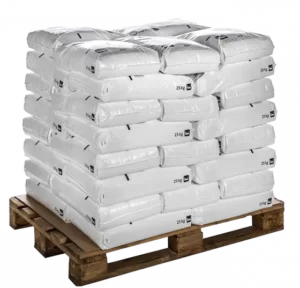
- Small 25 Kg PP bags.


Reviews
There are no reviews yet.